If you’re a woman in your 30s or 40s experiencing mood swings you’ve never had before, forgetting things when you used to remember everything, not sleeping for months, or wondering if you’ve suddenly developed bipolar disorder—this episode is for you.
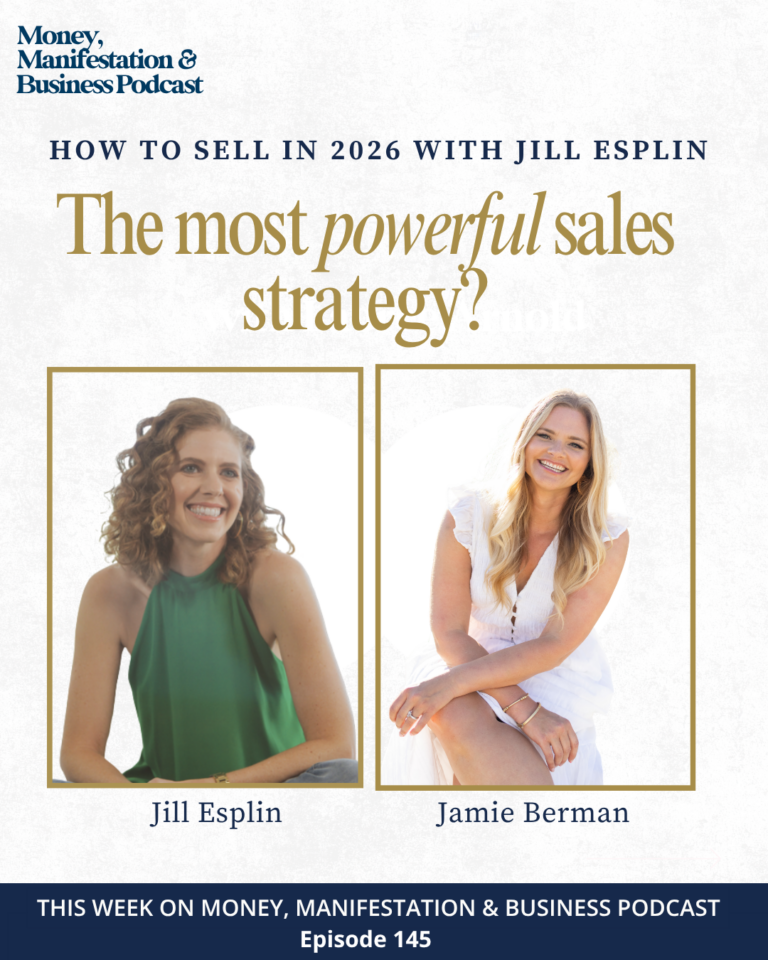
Jamie sits down with Sally Thibault—women’s health expert with over 45 years in the wellness industry—for an incredibly honest conversation about perimenopause, the transition almost no one talks about but 51% of the population will go through.
Here’s what most women don’t know: Perimenopause can start at 35. It can last 10-14 years. And it’s not just hot flashes—it’s brain fog, anxiety, insomnia, mood swings, forgetting words, and feeling like you’re not yourself anymore.
Jamie shares her own journey of struggling with symptoms for three years, thinking she was too young, trying to address everything separately, and only recently discovering (after Googling “did I become bipolar?”) that perimenopause was the answer. Her mom started at 35 too—but never mentioned it.
In this conversation, Sally breaks down:
- Why perimenopause can feel like you’re losing your mind (you’re not—your brain is rewiring!)
- The gut-brain connection and why anxiety starts in your gut
- Why sleep is more important than exercise during this time
- The nutrition changes you NEED to make (100g protein, 30g fiber, 2L water daily)
- Why most doctors only have 1 hour of menopause training (and often prescribe antidepressants)
- The rise of intuition and why midlife women are so powerful in business
If you’re going through this, about to go through it, or supporting someone who is—this episode will give you the knowledge, tools, and permission you need to navigate this transformation with grace.
Meet Sally Thibault:
Sally Thibault is the Founder of Mid-Life Reimagined, with over 40 years’ experience in the fitness industry as a former instructor, trainer and TV show host, she is now an International keynote speaker, bestselling author, host of the Mid-Life Reimagined Podcast, Menopause in the Workplace Workshop Facilitator, Master EFT Trainer and Professional Counsellor and fierce advocate for the power of midlife women.
Through keynotes, masterclasses, and mentorship, she coaches high-achieving women navigate the menopause transition, break through invisibility, restore health and vitality, to feel strong, clear and unapologetic as they step into the next most powerful decades of their lives.
Connect with Sally:
- Website: https://www.mid-lifereimagined.com
- Book: “Strong, Clear and Unapologetic”
- Instagram: https://www.instagram.com/sallythibault
Jamie Berman 0:01
Sally, welcome to the podcast. Sally, so excited to have you here. As I was sharing, I am excited to have you here, both for my podcast listeners and everyone who is going through, you know, this beautiful thing called perimenopause, anyone who’s about to go through it so you can prep and aren’t, like, totally shocked, like I was, but also, I’m like, so excited to dive with you, in with you, on a personal level, because, oh my goodness, wow, yeah, I recently discovered, I’m pretty sure this is what’s happening with me, is that the process of perimenopause has begun, and it’s an interesting, wild journey. And so I wanted to talk to you about it and just get your insights, your you know, I want to talk about it both on, like a physical level of what’s happening, but also, how can we use this? Right? That’s a big thing we talk about on this podcast. Is like, what is this season meant to be for women? Right? Because there’s obviously, like, a purpose and a reason and something amazing we can squeeze out of it. And I want to learn more about that. And just like, how do we support ourselves as, you know, leaders, as high achievers, as business owners, who are doing all the things, but our body is going through something that, whoo, it changes a lot, and a lot comes up in it. So anyways, thank you for your very welcome
Sally Thibault 1:31
and all those things that you mentioned, I think that they’re just such incredible questions. And you know, everybody treats this as such a physical experience, and it’s not it’s way more than that. And perimeter menopause is just the beginning, and unfortunately, it can last 10 to 14 years, yep, before menopause. And menopause is actually one day. So menopause is actually 12 months since the date of your last period, and it’s one day from then on you move into post menopause. So most women will experience their post menopausal years longer than their pre menopausal years. So it’s extremely important to understand what we are going to go through, physically, emotionally and spiritually, as you are entering this time. And can I just, I mean, I get so many women say to me, I’m terrified. Don’t be you. This is the time when you’re going to be coming who you were actually meant to be before life got in the way.
Jamie Berman 2:45
Oh my gosh. This is why I wanted to talk to you. Wild Ride. I need to know, yeah. So let’s Yeah.
Sally Thibault 2:57
So I was gonna say the problem is that up until just recently, women haven’t talked about this. Most women I work with say, My mother never mentioned it. She didn’t say a word about it. And so what’s happening now with the rise of Gen Y and Gen X on Instagram and social media is that they’re starting to say, wait, wait, what’s going on for me? I don’t this is not me. It’s not who I am. It’s not there’s something going on for me. And they’re asking questions. So prior to this, you know, the silent generation, you know, and going way back, the baby boomers and the generation Jones, as they now call us, we didn’t question, we didn’t ask, we just put up with it. We just thought that was something you’re going to go through, where every woman is going to go through it, and when you think about 51% of the population of the planet is going to go through this change in their lives, and up until now, it’s been silence. And so what’s happening now, and I’m really excited about this, is that we’re beginning to start the conversation, and we’re beginning to be open about it, and when we’re normalizing it, because every woman is going it’s not a question of maybe, maybe not. You are. That’s the way our genealogy works. You’re going to go through it. So the more information you have at the beginning of this process, the less challenge you will face, because you’ll have knowledge, and when you have knowledge, you make choice, and you make the choice right for you,
Jamie Berman 4:50
yeah, yeah, which, that’s what I’m so grateful you’re coming on and sharing, because I’m like, I’m so excited for women who are maybe about to go through this, to hear this, because. I think I’ve been struggling with the symptoms for probably three years, but my thought was, I’m too young. There’s no way like I would hear things about perimenopause, but I just like, in my mind was like, oh, that’s like menopause. That’s maybe late 40s, in my 50s. I thought, Oh, I don’t think my mom went through that till she was in her maybe 50s, late fit. I had no idea, because she didn’t talk about so I thought, No way could that be it? So I was trying to address all of these things separately, thinking, Oh, it must be PCOS symptoms, because I also have had PCOS. So just thinking and then addressing it all individually. But nothing was working. And then as of six months ago, it’s gotten so much worse, and I’m literally Googling, did I like become bipolar? What is going on? I’ve never I literally, I’m like, but that doesn’t quite make sense either. But I have never experienced shifts in moods the way that I have in the last six months. And I thought maybe I moved and maybe it’s a big transition. What is going on for me? And I haven’t slept in six months, it’s been fascinating that I talked to my mom. I said, Mom, I think I might be going through this. She’s Oh, yeah, mine started at 35 too. I’m like, Oh
Sally Thibault 6:10
my gosh, because we haven’t thought to mention it. I do with my children, my daughters now, but we have until this point, we haven’t thought to mention it, because women going through it, and I went through mine, you know, 20 years ago, but it was exactly like you. And you know, it’s like I say to women now, if you’re not feeling like you like I’m not feeling like myself, that’s when you know you’re going to go through something. And for many people, you know it’s interesting, because in relationships, I’ll get husbands coming up to me and saying, she used to love me, now she just hates me. Wait a minute, how old is she because? And you’re right, it can start at 35 that’s what I think, right? So normally, perimenopause wasn’t supposed to start, wasn’t supposed to start, or all the literature said till 42 but things are different now. Girls are entering puberty earlier. So often that’ll happen. They are delaying pregnancies again. It can often happen at the same time, which is really scary. And of course, we’ve all heard of menopausal babies, like women who think they’re finished, and all of a sudden, you know, in their 50s, will have a baby, and there’s like, holy, how did that happen? So it’s really about understanding and recognizing I’m not who I feel I am. I’m not sleeping, I’m angry. I if my husband chews too loudly, I’m just gonna smash him in all that stuff that never bothered you five years ago. All of a sudden, that starts to change. And I think that’s where we can get caught up in these symptoms, physical symptoms. I mean, I’m not sleeping, but I haven’t had a hot flush, or I’m not, you know, I don’t have what and, you know, not gaining as much weight as everyone talks about. But this can lead up like starting at 35 and and I think that’s what’s really difficult right now, is that we again, there’s a great deal of emphasis on physical symptoms, but we don’t talk enough about the emotional and spiritual symptoms that go on through this change, you are going to go through the most massive change of your life. You know when, when you go through puberty, everyone’s like, Oh, welcome to being a woman, isn’t this wonderful? And your parents put up with you, slamming doors and and all of a sudden, this everything’s about your friends and, you know, your parents are idiots, and you go through that, and that’s, that’s what the first big hormonal change we go through. Second is pregnancy. And again, people love you and care for you, and they’re so excited. And at the end of all this, you have a baby, and you’re falling in love when you go into menopause or perimenopause, yeah, there’s no party. Everyone judges you, and you can’t sleep, and you just feel Bolden. So those are the three major hormonal changes women go through, and and perimenopause isn’t and menopause up until it hasn’t been celebrated. In fact, it’s been kept quiet because a lot of women feel they’re getting old, especially in business, especially if you’re in corporate, it’s like, I’m not saying anything, because they’ll think I’m old. I think I’m at the end. And so for women, it’s been very difficult, especially women in corporate, because, you know, for many that are rising up the ranks of leadership, they want to let anyone know that this is going on because it will be seen as being too vulnerable and something wrong with them? So that’s why so many women begin their own businesses. 45 to 55 because the corporate environment doesn’t allow for all these changes. Inches. You know, a woman going through perimenopause, the cost to her
Sally Thibault 10:06
career is enormous. You know, she’ll have to take a here in Canada, where it’s difficult to get a doctor’s referral for anything the doctor. Get a doctor first, then you gotta get doctor’s referral to somebody who’ll listen to which could be tomorrow or six months from now, and then you might have to go through some procedures, as many women do in that first sort of perimenopausal stage. And so all that time, they’re having to take off work. And many women don’t have enough sick leave, or they’re cutting into their vacation care. So vacation time and so it’s an incredible cost to business. In fact, here in Canada, it can cost up to three to $4 billion in lost revenue by women going through perimenopause and menopause. And the cost of the company is enormous, and yet, if we understood what women were going through, we could make allowances for instead of having to hide it so and for women in business, it can be a challenging time, because you just don’t have the energy. You may be tired, can’t get through the day without having a nap. Anxiety levels are often high. Your threshold for BS, as I say, is lowered,
Jamie Berman 11:30
goes down. Yeah, yep. And I just noticed, like, I never for I never used to forget things. Never like I’d remember anything. My husband used to be like, Don’t you have to put stuff on the calendar. I’m like, No, I’ll remember right and now, all of a sudden, I’m losing words. I’m forgetting things. I’m saying, Oh yeah, I’m about to do that right now, and then completely forget to do it. And I’m like, Who what is happening?
Sally Thibault 11:53
That’s what a lot of women your age are saying. That’s the, probably the biggest challenge of all, is brain fog. Am I losing it? And what’s going on is because when our estrogen changes, estrogen is not just sex hormones. So it’s not about just our vagina and that change in our uterus, it’s actually changes every aspect of your brain, your heart, your gut, your joints, all are reliant upon estrogen, and so when that starts to fluctuate, the brain has to learn how to recalibrate because of this loss of estrogen, and that’s brain fog. So literally, what’s happening is you’re going through this brain fog. Is your brains going okay? I don’t have estrogen. I gotta figure this out. I gotta well, when stop trying to remember everything, right? What’s beautiful about it is your brain is actually rewiring. That’s what’s extraordinary about it. The brain is rewiring and recalibrating and learning how to adapt without estrogen. As our brains are so powerful, so during this time, you can feel like you’re losing it, when, in actual fact, you’re changing. And the beautiful thing that happens, which I love when I’m when I’m sharing this stuff, is that there’s a part of our brain that when we go through puberty, we become very conscious of what our friends think about us. That’s why, you know, parents, you know a lot of teenage kids will say, Oh, my friends, and it’s all about what they say. And can’t possibly go up wearing this without what are my friends going to say? Totally. The reverse happens in menopause, where suddenly you don’t give a ding about what anybody thinks. And can I just say that makes you brilliant in business, because all of a sudden you’re not concerned about what other people think of you, and so you begin to connect hard and mind and start doing what you want to do without this. Oh, what are they going to think about you? Just don’t care. I don’t care what people think about me. I’m going to do whatever I want if that means I get on my Instagram stories at 6am in the morning, my workout kid with my makeup on, I don’t care. I’m going to say what I want to say. That’s so empowering. Yes, as you move through the stage and for many women in relationships, that can be really challenging, because all of a sudden their partners are going, Whoa, wait a minute. You didn’t bother it didn’t bother you if I snored or, you know, ate or said something stupid, all of a sudden, you do care? Yep, that’s where the conversation has to happen with your partner. Yeah.
Jamie Berman 14:33
Totally, totally. I can understand that. I’ve heard that the majority of divorce happen in these years, right? And so it’s Yeah, super helpful to have some context of what’s going on. And I heard this thing is like, do I actually want to divorce, or am
Sally Thibault 14:52
I rates of suicide amongst women are 47 Yeah. And the highest rates of divorce at 47 because often when. A gas lit so they’ll go to a doctor and say, Look, this is all happening. And up until recently, most doctors only have one hour of menopause training in their eight years of medical training, until recently,
Jamie Berman 15:16
and 51% of women, I mean, 51%
Sally Thibault 15:18
of the population. And on top of that, of all medical research allocated each year, about 4% is allocated to women’s health, so that, so the majority that goes to things like cancer, heart disease, diabetes and so that, that leaves another tiny little pool for menopause. And it’s but it’s changing. It’s changing, but it’s a lot of catch up, and so you’ll often be gaslit by doctors. And you know, I don’t know what it’s like in the US, but in Canada and in Australia, when you go see a doctor, you have eight minutes, you so you can’t unless you know in your mind exactly what’s going on for you. They and you’ve got a doctor who doesn’t know it. He’s had no training. He She’s no training. They will often prescribe antidepressants. That’s usually the first protocol. And so for many women, they believe it’s the anxiety or depression they’re treated, not correctly for menopause transition, but rather thinking it is, I mean, it used to be called hysteria. Women used to be committed to mental asylums because it was hysteria, where they were hysterical and and so that’s taken longer. But, you know, I’ve gone back to my mother’s era. I mean, most of my mother’s friends were on an antidepressant, they’re on on Valium.
Jamie Berman 16:42
And, yeah, that’s, that’s exactly what my mom said she was given. And, yeah, does it help?
Sally Thibault 16:52
Not at all. Okay, because all you’re doing is masking. Okay. What’s going on when we understand that that menopausal change impacts our gut, so you may have to have a gut brain connection. So when women are going through anxiety, many women feel anxious and depressed during this time, the first place we need to look is their gut, looking at the gut microbiome. Now a lot of women will say, I used to be able to have eat this or that, or whatever, all of a sudden. How come I’m bloated all the time? How come sugar impacts? How can caffeine and alcohol is probably one of the biggest one that’s impacted most. It’s because of our gut. So when you feel anxious or depressed, the first place we have to look at is the gut healing the gut. So we’ve got to look at the gut microbiome, which is, again, you know, estrogen, it just impacts on everything we do. And so when we look at, okay, how can I heal my gut first, which is increasing fiber, 30 to 40 grams of fiber a day, you know, good things like sauerkraut and probiotics, drink yogurts, that type of stuff to really feed that gut microbiome, and then you’ll feel better. Your Your emotions will change.
Jamie Berman 18:10
Wow, wow, amazing. So for for someone who says, Oh my gosh, like I’m going through it, the mood swings or depression anxiety, nighttime insomnia, nighttime anxiety, and they want to, you know, do this in a more holistic way. Maybe the anxiety meds aren’t working. Where can they learn more about that?
Sally Thibault 18:32
Yeah, so they can actually check on my website, or I’ve just released a book called strong, clear and unapologetic. We can put the link in this, and that goes to what I call my 10 Principles of wellness, definitely. So I look at how you’re eating. I’m a great believers. As we’re going through this process, we have to let go of diet mentality and begin to relearn how to trust our own intuition. That’s the thing that’s really highlighted during this menopausal changes, your intuition, we become way more intuitive as we release this ability or thinking that we have to, you know, what everybody else thinks about me is important, and so we call them the wise women. In the past, they were the wise women. And back in the day of the, you know, the tribes and the claw and Fang jungles, when, when they needed to feed the tribe, the people that went out and looked for the beast with the the younger men and often the women, younger women and the older women were left in the village to care for the children, to make sure that everyone was eating, and it was their job to keep the village working. That was the role of the wise woman. What we’ve done in our society now is we, we don’t value wisdom. And as women go through this perimenopausal and menopausal change, one of the things that I find them doing is saying. I just have this gut feeling, or this is what I’ve always wanted to do. In fact, I did a podcast just recently. A friend of mine at 57 decided, after years, I’m going to, you know what, I’m going to become a travel consultant. She did, she did and this, I mean, she’s wanted to do that since she was 15 years old. Yeah, and it was just she’d been a health coach for most of her life, and then she literally did a travel course, and one day said, I need a new job. This is a story that’s just really and she walked downstairs, opened her computer, and there was an email from the place that she’d done her course through saying, Listen, there’s a company looking for for travel, corporate travel consultants. We put your name forward just like that, and now she’s just taken off with her career at 57 Yeah, and we talked about because she’s a very good friend of mine, and we talked about this ability. That’s what happens when you move through this. Your intuition is going to become so honed and so refined in business, it’s your greatest ally, your own intuition, knowing what I and I am a great believer that women have that over men. That’s why a midlife woman so powerful, because she has this gut feeling, this inner knowing, this knowledge that just guides her and and because everything going on with the brain, you just can’t operate in that headspace anymore. You’ve got to drop into your heart. That’s what your power is, right?
Jamie Berman 21:36
Yeah, yeah, absolutely. And I found and I coach, I would say majority of my women, the women that I coach, are in this age range, right? And I see this happening a lot, where it’s just like they feel like that hustle way, the way that they’ve always done things, the pushing, the pressure, it’s just like something happens within them where it’s like, hard stuff. I can’t even do it, but they get really concerned because they don’t know another way, and they don’t feel safe trying another way, and it freaks them out, right? So it’s like this phase where no longer the things that like aren’t in alignment. Those things are falling away, and our body is literally telling us, like, no, no, no, not happening, in fact, like we can’t even force it anymore, the way we used to be able to force it, we can’t even do that anymore. But it’s just scary because the new way hasn’t the reinvention hasn’t happened yet, and it feels confusing and it feels unsafe oftentimes, and it feels like, Well, where do I know? What do I want? I’m just confused. Do you have any advice for that transition, that phase? How do we number one is nutrition. Midst of
Sally Thibault 22:50
that number one, you know you have to because everything in your body is changing. You’re losing muscle mass. The brain’s changing. Your Guts changing. Your heart is changing. So the first place you need to look at before you look at anything else is lifestyle. So nutrition, 100 grams of protein a day, 30 grams of protein, grams of fiber, two liters of water a day. You want to look at the foods that you would normally reap for, like coffee, chocolate, sugar, alcohol and anything with gluten in it, because that’s the gut changing. And unfortunately, as we go through perimenopause and menopause, our body doesn’t assimilate alcohol or sugar as it used to. You know, you often hear girls saying, Oh, you speak out at 25 and I can be out all night and have two hours sleep and go back to work and I’ve still got the stamp on my head. You just can’t. Can’t do that anymore. Your sleep totally has to become your priority, because that’s the major disruption. So things like alcohol are going to impact on your sleep. Sugar is going to, you know, a lot of people will have if they’ve had a really bad day, come home, so I just have a glass of wine, and then sitting on the couch at eight o’clock just feel like something sweet. Well, both those are going to impact on your sleep, and so that has to be a priority. In fact, all the studies now are showing that sleep is the number one, even, even, even more important to you than exercise is sleep. So that has to be a priority. So you have to put in a place sleep hygiene, like phones off at least an hour before you go to bed, no sugar, no alcohol for at least two or three hours before you go to bed. Because what happens with sugar chocolate, for instance, when you eat chocolate or sugar, your blood sugar level rises, and then it makes me and then it starts to drop, and it’s usually around 2am that’s got that Chinese call that liver out and and the hormone that helps adjust the blood sugar level is cortisol, and cortisol is out. Stress hormone so it wakes you up. So you’re waking up at 2am in the morning worrying about things. Oh, my God, you know, I wish I hadn’t said that. It was 18 years old and nobody talked to me. Or, you know, I wish I’d done exactly whole entire life. You really live at 2am every morning. And because the brain comes up, you go, but that’s cortisol. So I mean, if there’s, if think, if anything to take away from this call is prioritize your sleep. It is really important, especially as you’re going through this process. Because as you sleep, of course, the brain goes through all its changes. It toxifies. And you know, latest research around Alzheimer’s and dementia have shown that many people who women, more women than men, dementia and Alzheimer’s haven’t have poor sleep. So that’s a priority next. Next is your nutrition. You have to have that protein, you know. And I worked for many years in weight loss. My background, I was a fitness instructor. I started in 1980 so I’ve been in this industry over 45 years. And we used to do the fat loss thing, you know, lots of cardio. That’s that has no normal no more cardio. You only need 20 minutes of cardio and doing what we call h i it high intensity interval training. So if you go for a walk, walk for five minutes, go as hard and fast as you can for 20 seconds, fall back five minutes, and you’re three or four times to do that far better than Get off. Get off the treadmill. Get Okay, the treadmill, yeah, because, and the thing we need to do now is build muscle, because as we age, we begin to lose muscle mass. And muscle is the center of your energy, your immunity, your strength. I mean, you can let you look good anyway, as you age, so you need to be focused on heavy lifting, and again, 20 minutes, three times a week. That’s really important. And then so that’s the and you have to have protein. You have to have protein with that. And I also recommend to people looking at creating, creating really good for building muscle mass and helping with brain health. It’s not expensive. You can add it to you smoothie in the morning.
Sally Thibault 27:23
So those are the priorities we need to look at. And then if that’s not working, you look at your supplementation, things like magnesium, ashwagandha, fish oil, vitamin D, all that stuff first. Then if that’s still not working, then, then look at doctor for for hormone replacement therapy. They now call it menopause replacement therapy, because it’s it’s fairly new. It’s been around a long time, but the new research is coming out, and it’s not the be all and end all. To me, it’s get though your nutrition and your lifestyle sorted first, and if you’re still experiencing, you know, severe menopause issues, then talk to a doctor about menopause replacement therapy. But the other has to come first. You know, I was, I was at a an event, Okay, a couple of weeks ago, and we’re talking about nutrition versus supplementation. And the scientist there was saying, you remember, when you’re doing supplements, they supplement nutrition. They supplement nutrition. You need to be in nutrition looking all colors of the rainbow. So you want to be making sure you’re having berries and sweet potatoes and broccoli and oranges like when you go shopping, look for things that are the bright cars with the antioxidants in them, so, so that you can look at that first and I and the other thing is, I guess it’s not to treat menopause as a disease. It’s a transition, a transition and a transformation, yeah, and to me, I mean, I went through my perimenopause when no one talked about it and and I remember going to a doctor. I many years ago, aging myself. But there were The Oprah Winfrey Show used to be on every afternoon, and I’d be through challenges, you know, like terrible periods, not sleeping, anxiety. I was working a really stressful job at the time, and I was home this day, and because I was exhausted, and I she started talking. Had a guest on, I think was Dr Christiane Northrup, and she was talking about this thing called perimenopause. I’d never heard of it. This is 2005 and I was so excited. I wrote it all down, and I just happened to have it. I to have an appointment with my gynecologist the very next day. And when I went, I was first into his office. I really liked this guy. He was great I, you know, I really, yeah, he was great guy anyway. And I said, Oh my god, I think this is perimenopause. And he just looked at me and he said, we don’t think that’s a thing, do we? And I was like, what? Oh, my God, I am dying.
Sally Thibault 30:08
And it was then, and then, then I ended up with fatigue and to leave my job. And I realized now I left my job because I were exhausted, not because I’d lost my edge. That’s how I felt. I felt like I couldn’t function normally any longer. I mean, as it turned out, was the best thing that happened, because I’ve gone and do such great things since then. But it was, it was that moment of I’ve lost it, like I’ve lost it, and it wasn’t the case at all. If he said to me, all right, we need to look at your nutrition, your exercise, your lifestyle. Let’s look at stress reduction techniques that’s different, instead of being gaslit. No, that’s not it. But today, I mean, you know, you just hop on on Instagram. Now there’s so much information and and really it’s all about because one woman going through menopause and perimenopause is one woman going through perimenopause and menopause, your symptoms, your challenges, may be different from the woman that sits next to you, but doesn’t make it any worse or better or more or less, it’s, it’s what your it’s your experience. And so learning to trust your intuition, creating strategies that work for you is really important. It’s because we live in different places and lifestyles. And I think that, to me, is the greatest thing is that your knowledge is the precursor to intuition, and so when you’re going through this, it’s like you learning to trust in yourself. You know, don’t discount any symptom. Don’t say it’s all in my head. Don’t say there’s nothing I can do it there. You always have a choice. You always have a choice. And if you go to see a doctor and you’re, I don’t know if that’s right, go see someone else, I get a second and third opinion.
Jamie Berman 32:10
Yeah, do do blood panels? Do Dutch tests, tell you if you’re
Sally Thibault 32:15
so you and it will tell you, yeah, getting your blood work done is really important at this stage, because the other thing about us, as we lose this, lose our estrogen, it impacts on our heart and cholesterol levels. So again, you have to be looking specifically at you may have a rise in quarters cholesterol. You might have some issues with heart and you know, number one killer of women is heart disease. Second one’s frailty, so, and that’s all brought about by this change of, you know, hormones, so the more aware you are, the better. And for those in business, it’s tough, because as you know, as entrepreneurs, you never switch off. People tell you to, oh, just switch off. Yeah, because you’re thinking, Okay, what’s next? What can I do? How can I serve my client better? How can I create a better system? You always got this running. And so for, I think, for women in business, you know, if you’re in a if you’re in a job, you can lock the door at five o’clock on a Friday. You have to think about it. You ever got a business you don’t do that? I don’t know how many people said to me, Oh, it must be so nice. Have all that time on your hand running your own business. What in the six and a half days focused not for any other reason. I love what I do, and most entrepreneurs do,
Jamie Berman 33:46
uh huh, yeah, yeah. So, so with it that. What advice do you have for women in business who feel like they can’t shut off or there’s a lot of high stress? Is there a
Sally Thibault 34:01
absolutely mindfulness and meditation journaling, I’m a great believer. I use an edgy psychology technique called tapping. So I use tapping a lot. Yes, yeah, great. So tapping is brilliant. With meditation, I love our mind, heart, meditation. So in the mornings, before I get up, I’m very conscious of taking all the thoughts from my mind and placing them in my heart and just trusting that whatever problems there are, I’ll figure out the solutions. It’s been very mindful of your body where you’re holding stress, because we’re little, you know the story of the frog in the pot? Yeah, that story. Okay, so if you put a frog in a pot of cold water and you slowly turn the heat up, frog would just sit there as the heat comes up. But you had a pot of boiling water and you try to throw the frog in, it would jump right out. And what happens is that we, in business, especially, we often have this low grade stress and anxiety going on all the time. We don’t even know it, so it’ll show up. You know, your shoulders are up, where you end up with a headache. We don’t give ourselves permission to take time just breathe. Okay, just just, just bring get up out of that chair, go for a two minute walk, put the kettle on, do 10 power squats, like get your body moving through the day and and give yourself permission when you’re tired, sleep. If that means you have to have a nap between 12 feet and one every day. Do it, you’ll feel so much better. Don’t Don’t ignore tiredness. You are going to be tired because you are not going to get eight hours of sleep. It’s not going to happen when you’re going through this. You know, you get hot flushes and night sweats. It’s joyful things.
Sally Thibault 36:07
Women. Women deal with their stress best, what we call tend and befriend. So when a woman is stressed, she needs to talk to her friends. Just just find that circle of people who get you, and they don’t, they don’t have to tell you. I saw a great quote the other day, and I think it’s this new show, Madison, that they’re all talking about, and and the main character says, This is what I want to do. What do you think you’re my best friend? She said, My role is not to judge you. It’s to help you do what you need to do. And I love that like it’s not about your friends trying to tell you anything. It’s your friends going, you know what? Me too, and we’re going to get through this together. And so women, when we when we it’s important at this age to get a really strong and whether it’s coaching, you’ve got a good coach, whether it’s creating that community around you and sharing how you feel. Don’t be afraid to say, I am just done over it. Let’s organize a girls weekend away and just get them, I don’t know, do whatever we need to do. Or, you know, let’s go for a girls night, or let’s go watch a movie together. And to me, that’s really important for women. You can have all the stress reduction techniques in the world. But I think women need to tend and befriend. We need to have friends. And in perimenopause, it’s really important so you have shared experiences.
Jamie Berman 37:29
Yeah? Makes sense? Yeah, that’s why I wanted to have you on it. Like, let’s talk about this. Let’s share it with everyone. And really, what I’m hearing too, is like, you know, I think up until we reach this point, for so many of us, it’s been about giving, giving, giving, giving, giving to everyone else, right? When we even in our teen years, we’re giving pleasing our parents, then it’s giving to our education, then it’s giving to our work, then it might be giving to our families, right? And this sounds like a time where you can’t give everything you’ve got. It is a time to really expand your capacity for receiving and learn to give to yourself, because that’s the only way you’ll get through this gracefully, is by putting yourself as the priority, probably for the first time in your life, which is also amazing lesson not going to be easy. That’s why we get support. We get coaches, we get friends to support us through that. But yeah, it sounds like an amazing opportunity, and goes hand in hand with the work that I do. 100% think
Sally Thibault 38:35
it goes exactly with that exactly worked out beautifully with my work that you’re doing. And I just want to say, you know, the thing is that for many women, they’ve given so they don’t know how to create the boundaries I, you know, I say to when I’m working with clients, no, is a complete sentence. No, not no. Oh, and no, I’m sorry, no. And that’s takes. It’s like a it’s like a muscle we have to work on. You’ve got to get comfortable with it, you know. And it’s difficult for many women and sort of the age group that you that your sounds like most of your clients, they may have kids and school activities and knowing a business and elderly parents and like all this stuff going on, and to say they’ll just take time for yourself. That’s, yeah, great in the inner, you know, great world. But often you can’t find that. So it’s, it’s like carving out these little sitting in the car waiting to pick the kids up, and just sitting mindfully. Don’t scroll, just breathe. Focus on your breathing, letting it all go. You know, for me, it was always, I just get up 530 every morning, and work out it was the only time I could do it, because I had the kids and they’d be in the car and and, yeah, yeah. So then that became my and I value that time. I still do. I still wake up at 25 and 530 every day, and that is my time. So it’s finding those. Little, tiny parts in your day when you can just go, okay, breathe, just just, just hold a second. Just breathe, because your intuition, yeah, in business, that’s why I’m saying so many women are successful in business. And I’m saying, you know, in the in the work that you do with money and manifestation, it’s trusting you, trusting your gut, listen to your heart, it will guide you. We’ve just come back from a trip to Australia. We moved to Canada two and a half years ago. All our kids live. It’s a long story. Anyway, we lived for 40 years in Australia, and we went back just recently and close up everything, get rid of all the things are in storage. And it was the most stressful trip. It was just one thing after the other. Was stressful, you know, getting rid of the storage, getting all our stuff back here. Didn’t Not, not knowing how much it was going to cost us. And then we were friends all the time. And I was saying to my daughter last night, do you know the funniest thing is, we were stressed about but everything turned out better than we expected. And she said to me, so what’s the lesson, mom, trust like, you know, even in the math, be very intentional. I’m sure this is what you don’t, very intentional, what you want, so the universe gets it. Don’t do the and, but this is what I want, yeah, how do I get it? This is what I want, this and and and be open to the synchronicities that happen because we’re pulling it in all the time. Yeah, it’s just we get so caught up in everything we’re tired. But just that moment of mindfulness is just important. As I said, I like to just go in all the thoughts of my mind, drop into my heart, and there’s the answer. And so a lot of people will say, you know, hand it over to God or to Jesus. It’s never works for you. And then just Yep, let go and be you. The more stressed you are, the more confused you are about what you want, you can’t see it. Opportunities present themselves all the time. I mean, I just, I can’t tell you, look at that day being home, of all the days I was home, and that was the show Oprah Winfrey was talking about. That led me to the question that led me to right,
Jamie Berman 42:18
no coincidence,
Sally Thibault 42:22
like no one speaking to a like minded soul. There are no coincidences. There are synchronicities, and your job is to be open to them. And when you’re going through this change in your life, your intuition is just heightened. It’s like this bud and this blossom that’s opens up, and you’ll start to think and believe things you’ve never thought and believe before, but it’s you, because for the first time in your life, you don’t have to worry about, you know, what reading level is my child, and you know where they have to be. And you can really just, I mean, I love this time in my life, you know, we just got a brand new little granddaughter, and I was saying to my friends in I was in Australia. I’m so glad that I have cared for my health for the last 20 years. All this information that I put into place allows me to be a present grandmother. I’m running two businesses. We’re there with her. I get down on the floor with her. I pick her up with me. You know, we just have the energy. And to me, that’s what’s really important, and that’s what what you know as you’re going through this perimenopause stage, that’s what you’re leading to. The more knowledge you have, the more strategies you can put into place that are going to last you for the rest of your life. So when you get to this later stage of midlife, beautiful you know that’s what you want. It’s about the life in New Years, not the years in your life. So what you’re going through now, many of your clients implement those easy strategy, nutrition, exercise, stress management, sleep, good nutritional supplementation, if you need it, and and knowledge, and then you can everything you put into place now, small, incremental things will last you for the rest of your life, and that’s what’s really cool.
Jamie Berman 44:09
Then the best is yet to come if you implement those things now, you’re an example that’s amazing, amazing. Oh my gosh. Sally, I’ve loved this conversation. Thank you for your insight, your knowledge, your wisdom. This was an amazing, amazing conversation, and I know it’s going to impact so many of our listeners. And so thank you so much for being here, and we are going to link up all of your information, your website, your socials in the show notes, so that everyone can come follow you and soak up all of the magic, so that you know we can go through this more simply, more aggressive you
Sally Thibault 44:49
are going through this massive, transformational change that will you and you become who you were always meant to be before life got in the way. Yeah. How good is that? So good. Lovely chatting. You’re welcome.
Jamie Berman 45:06
Thank you so very much. You too. Bye.